
Illustrative visualization, not a photograph of deployed fAInd equipment.
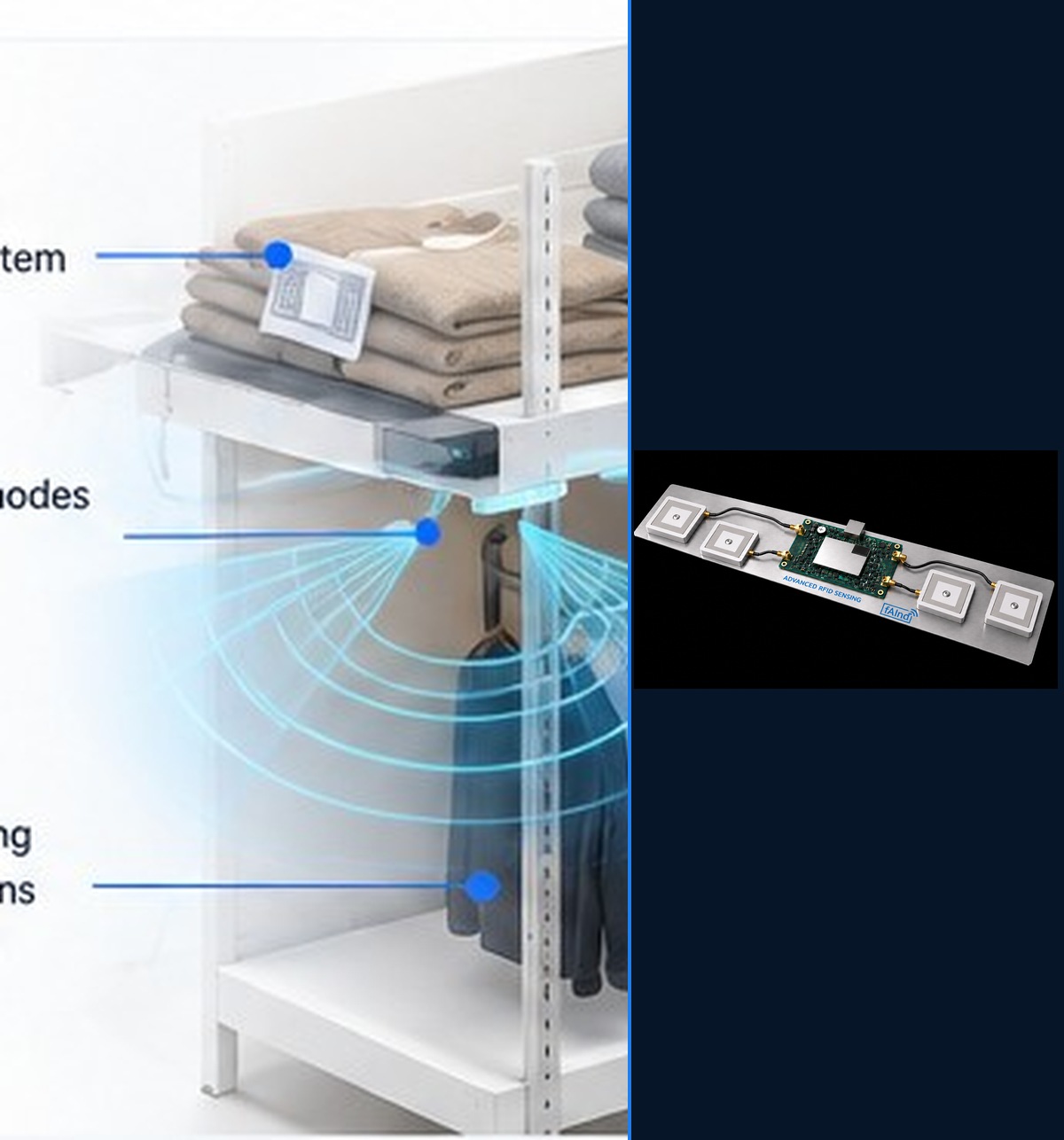
Multi-static RF measurements and centralized AI signal processing enable item-level localization.
Illustrative visualization, not a photograph of deployed fAInd equipment.
Use standard, battery-free passive UHF RFID labels.
Distributed frontend nodes capture RF signals across the environment.
Signal processing combines observations to estimate item position.
Surface item locations, counts, and movement events in software.
The system is designed around existing passive RFID infrastructure economics — not costly active tags attached to each item.
Tag sensing, localization, and application data are separate layers that work together.

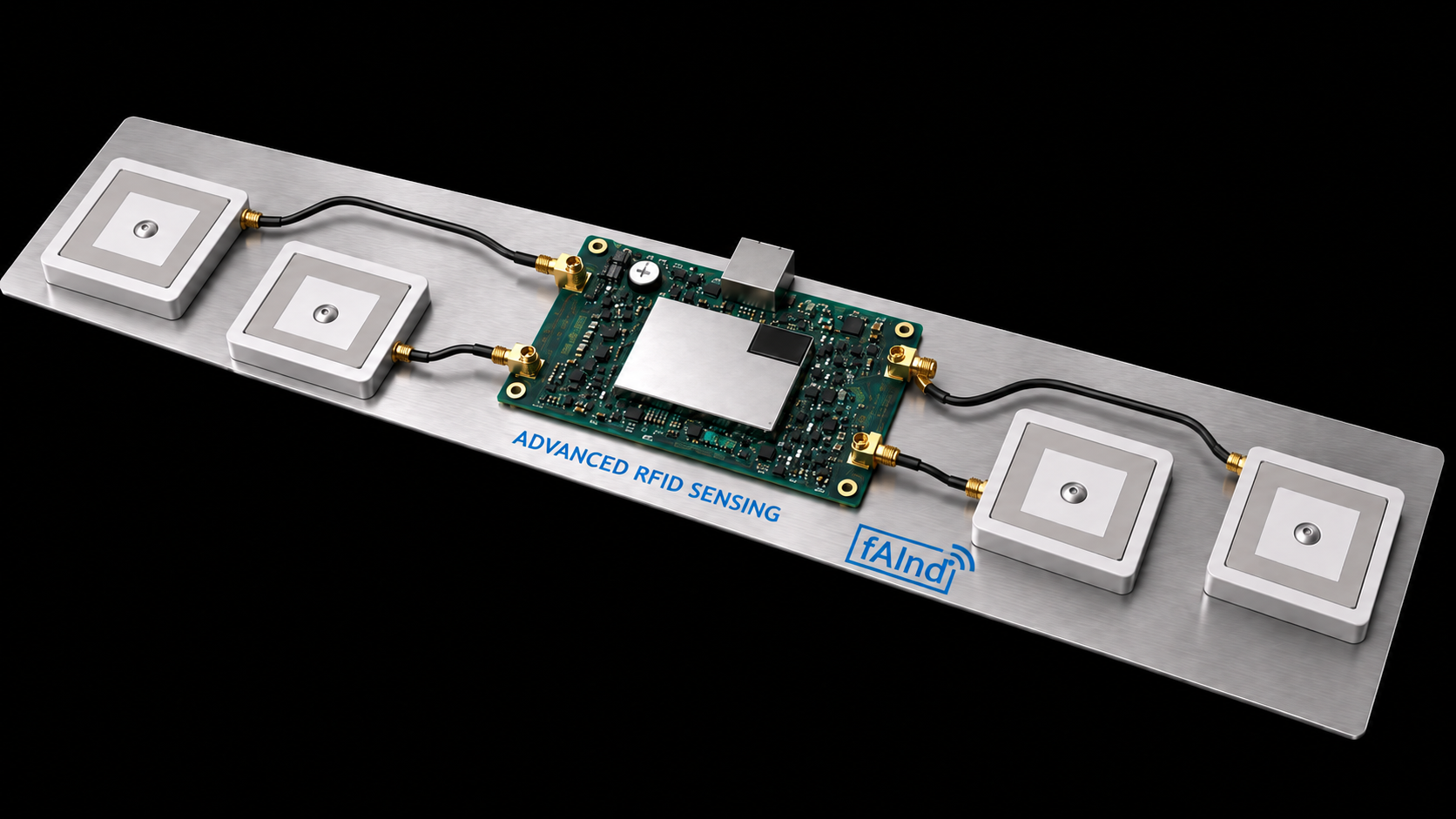
Compact sensing hardware fits beneath existing shelves. Four independent RF antenna connections feed the central PCB. Illustrative visualization, not a finalized installation specification.